
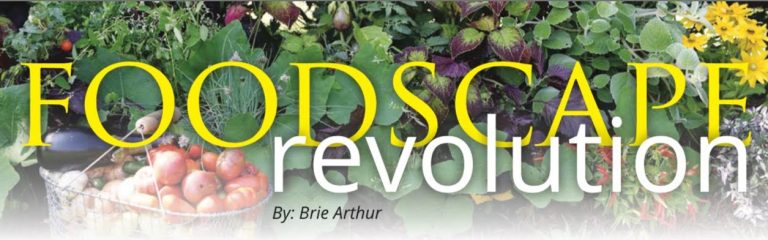
“Garden to Table” is the best way to describe my passion of Foodscaping. The idea is simple: add purpose to landscapes in developed areas such as suburban neighborhoods, office parks, school campuses and retirement communities. With an education in design, an enthusiasm for ornamental horticulture, and a hunger for local, organically raised produce I see potential to grow food in every cultivated space. From simple crops like garlic to low maintenance cover crops and grains, open mulch space is an opportunity waiting to happen!
Foodscaping isn’t new in fact, this strategy for planting food crops in convenient locations goes back centuries! From cottage gardens and French potage to the edible landscapes described by Rosalind Creasy, Foodscaping is just a modern term for a logical and easy way to grow meaningful amounts of food.
Start by thinking “outside the box.” Lumber encased beds are NOT the only way to grow food. In fact, raised beds are generally the cause for the “no food in the front yard” mantra of suburban HOA restrictive covenants. Boxed beds can also cause decreased production due to overplanting. This also can lead to insect and disease problems. Additionally this method of containing edibles limits available square footage and creates monocultures. Did you know that only four plant families make up the lion’s share of the edibles grown home gardeners?

Top 4 plant families for grown edibles:
- Amaranthaceae– beets, quinoa, spinach and Swiss chard
- Brassicaceae– cool season crops such a broccoli, cabbage, cauliflower and kale
- Fabaceae– beans, peas, and peanuts
- Solanaceae– warm season crops like eggplant, peppers, potatoes, and tomatoes
By incorporating popular annual crops like tomatoes, peppers, kale, and chard into the landscape you will add brilliant colors and textures that blend beauty and abundant harvest. The ornamental plants offer the biological diversity to attract beneficial insects. Focus on developing the sunniest areas of your landscape, as most edibles prefer bright exposure.
You can start Foodscaping by planting bed edges- you will be amazed by how much square footage is available. Bed edges are a great place to grow low maintenance plants such as garlic, arugula, lettuce, basil, and peanuts. This location is easy to access for watering and harvesting and really makes a visual impact. I had a professor in college explain that any combination of plants could make sense with a tidy edge. That advice continues to inspire me as I look for strategies to increase local food production.
My top picks for bed edge plantings include traditional southern agricultural crops like peanuts to hardy greens that self-sow such as Arugula. Many edibles are effective at deterring grazing mammals so consider plants like Garlic which will help ward off moles and voles. Most importantly, be creative in your plantings and change them seasonally to they look beautiful year round.
I never say any plant is mammal resistant, but here are a few plants for cool and warm seasons that can help reduce browsing damage from deer, rabbits, moles, and voles with your Foodscaping edge…
Cool Season Crops for Edging

Arugula’s bitter flavor deters rabbits

Garlic’s smelly bulb deters moles and voles deer

Onion’s smelly bulb deter voles

Lettuce- easy to harvest

Potatoes- Solanaceae plant foliage is poisonous which helps deter deer and rabbits
Warm Season Crops for Edging
You can plant bed edges any season of the year, including through the heat of the summer. My favorite warm season bed edge plants include a variety of flowering ornamentals such as trailing Vinca, Marigolds, and Coleus along with edibles that help deter browsing mammals.

Basil has a bitter flavor that deters rabbits and deer

Peanuts naturally puts nitrogen back into the garden

Dwarf Peppers: Solanaceae plant foliage is poisonous which helps deter deer and rabbits
Ultimately, the goal of Foodscaping is to show the vast opportunities that existing landscapes offer. From reducing your food miles and carbon footprint to eliminating food deserts in every community, incorporating edibles in traditional ornamental landscapes is an easy way to contribute to the world in a meaningful way. Foodscaping is a great way to start incorporate permaculture into your garden. Learn more about making your own Permaculture Garden Design here.
Written by Brie Arthur
Author of: The Foodscape Revolution
“This post is provided as an educational/inspirational service of the National Garden Bureau and our members. Please credit and link to National Garden Bureau and author member when using all or parts of this article.”


2 Comments. Leave new
Great article…thank you! I read her book as well as Rosalind Creasy and immediately went out and tore up my grass! What a joy! I planted buckwheat, rice, some wheat, corn a myriad of other veges and pollinator species. Our favorite thing to do now is count the incredible amount of birds, bees and butterfly’s that populate our small front yard. I gow enough food on the=at 1/4 acre to feed a family of 3 for a year!
Great Article ! Everyone should have a garden – But not the same garden …..