

2027 is the Year of the Buttonbush
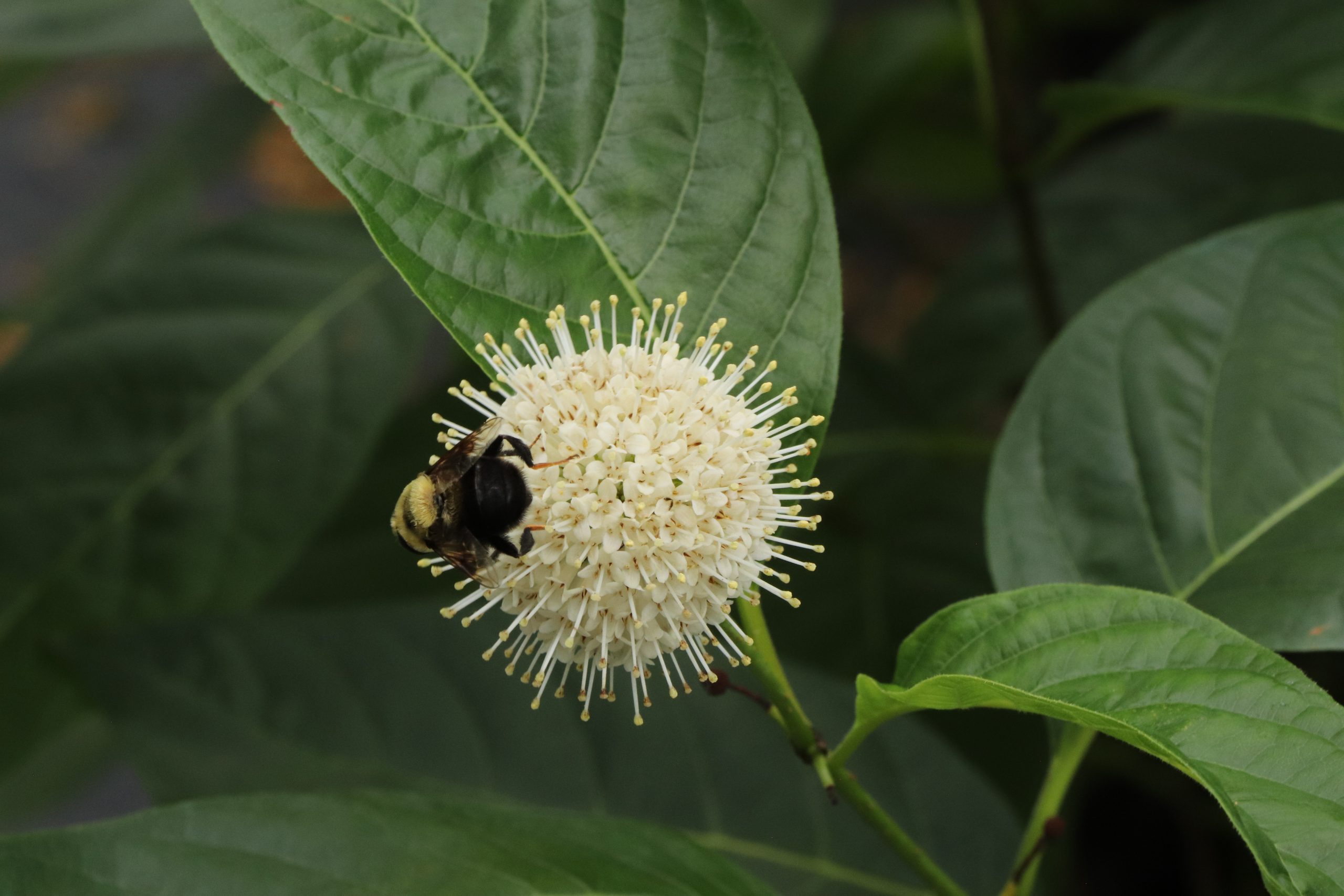
Cute as a button and buzzing with bees, buttonbush (Cephalanthus occidentalis) is a North American native shrub known for its round, spiky white flower clusters. They look like tiny pincushions or bursts of fireworks. Each year, the National Garden Bureau picks one easy-to-grow plant for its “Year of the” program, and buttonbush earns its spot by thriving where many shrubs struggle. It grows happily in wet soil, rain gardens and pond edges, and it feeds butterflies, bees, hummingbirds and birds all summer long. Compact varieties like Sugar Shack®, Sugar Shack® 2.0 and Fiber Optics® make it easy to fit into home gardens of any size. Read on for growing tips, care advice and garden ideas, or browse our buttonbush pictures for inspiration.
Overview and History
Buttonbush (Cephalanthus occidentalis) is a genus of at least six species of shrubs or small trees of the Madder family (Rubiaceae) native to North America, Africa, and Asia.
Buttonbush roots and bark have been traditionally used by several Indigenous tribes in medicinal preparations to treat headache, fever, dysentery, and muscle inflammation. However, leaves contain the glycoside cephalanthin and can be toxic to humans and animals if ingested in large doses. Because of the toxic leaves, deer tend to avoid buttonbush.
While beneficial to native wildlife, beekeepers also value buttonbush. In the 1700s, buttonbush was introduced to commercial trade as a nectar source for honeybees.
Buttonwillow, California, was named after a buttonbush tree. The Yokuts tribe used the tree as a meeting place. Later, settlers used the landmark for cattle rodeos. The historic tree is now a California Historic Landmark.
Basic Types of Buttonbush
In North America, native buttonbush grows in areas from Nova Scotia to Minnesota to Florida and eastern Texas. In the southwest, buttonbush can be found from California to western Texas and into Mexico and Central America. While southwestern buttonbush previously was classified as Cephalanthus occidentalis var. californicus, it’s been reclassified as simply Cephalanthus occidentalis.
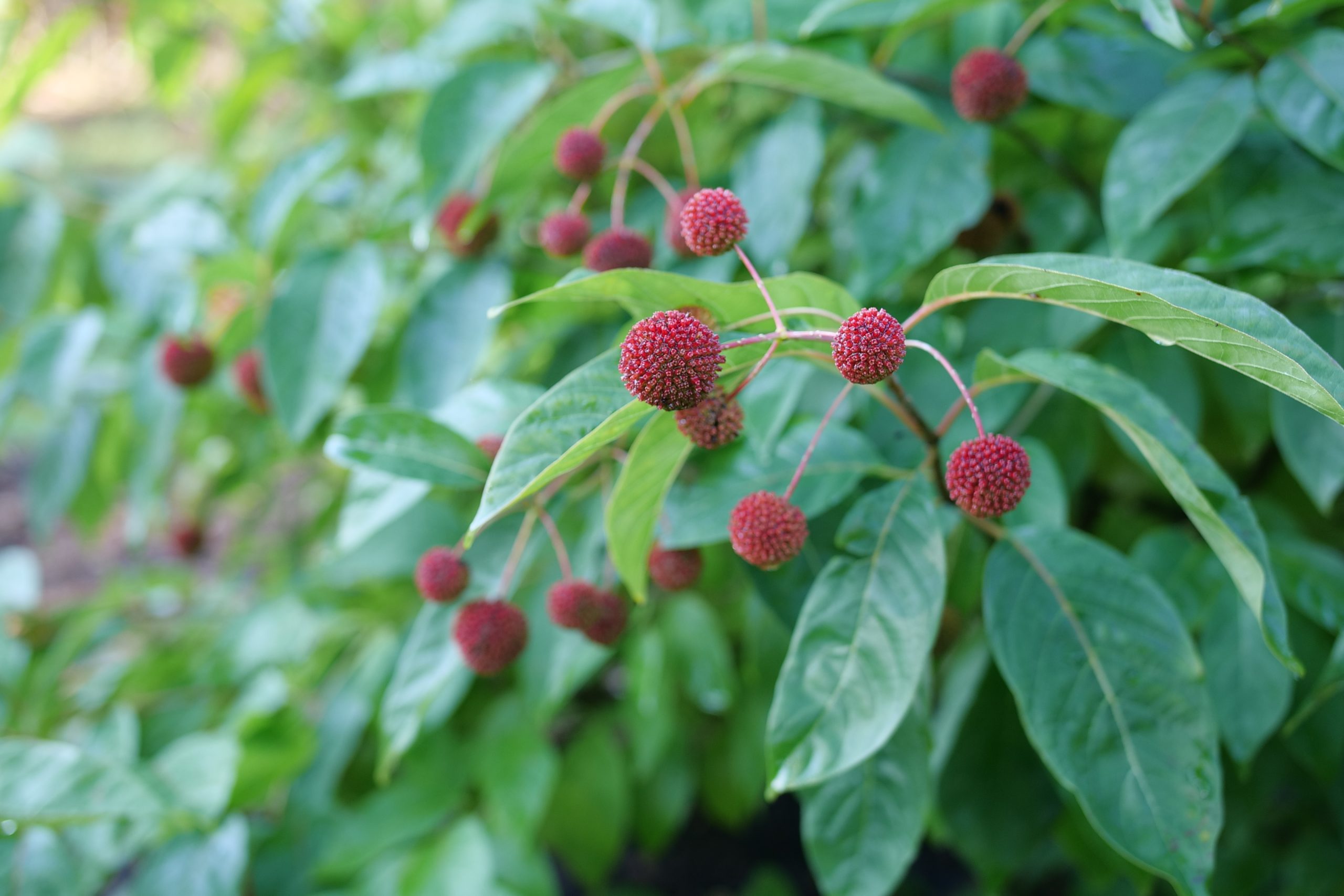
A versatile, multi-branched, deciduous shrub, native buttonbush thrives in moist to wet soils. Perfect for erosion control along shorelines, it forms dense stands that help fight erosion. The native shrub grows up to 20 feet tall when mature. Long, fragrant, tubular, white to pink flowers appear in summer to early fall, forming dense clusters at the end of the branch, giving the flowers a pincushion appearance. The ball-like fruit contains two-seeded nutlets, which form in early fall. The red or tan seed balls provide seasonal interest. With its long-flowering blooms and seedheads, buttonbush supports wildlife year-round. The shrub is a host plant for the titan sphinx moth, hydrangea sphinx moth, and royal walnut moth.
Hardy in USDA zones 5 through 9, native buttonbush grows well in sandy, loamy soils, although it’s adaptable. It favors acidic or neutral soils and dislikes alkaline pH. Buttonbush prefers medium to wet soils.
Along with adding year-long interest to the landscape and supporting wildlife, buttonbush is a low-maintenance addition to the garden. Once established, it thrives with minimal care. It blooms best in full sun but also grows in part shade. No pruning is needed, but the shrub can be shaped in winter or early spring if desired.
New Buttonbush Varieties
With the outstanding beauty and wildlife benefits of native buttonbush, these new native cultivars—or nativars—offer smaller, more compact options for home landscapes and pollinator gardens. See photos of these and more in our Buttonbush picture gallery.
Sugar Shack® Buttonbush
A compact buttonbush variety with the same beautiful benefits of the native—fragrant, nectar-rich flowers, red fruit, glossy leaves—Sugar Shack is perfect for smaller garden spaces, growing only 4 to 5 feet tall and wide. USDA Zones 4-10
Sugar Shack® 2.0 Buttonbush
For tight garden spaces, Sugar Shack 2.0 grows only 3 to 4 feet tall and wide—but with all the big benefits of native buttonbush. Perfect as a specimen or hedge in a pollinator garden. USDA Zones 4-10
Fiber Optics® Buttonbush
With a compact habit and finer texture than the native buttonbush, Fiber Optics grows 4 to 6 feet tall and wide. The rounded habit looks lovely in the landscape, providing wildlife- friendly nectar and seeds, while also adding four seasons of interest. USDA Zones 4-9
Special Offers
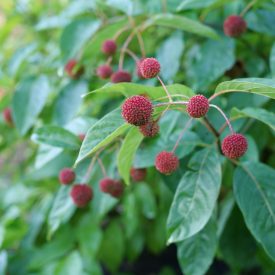
Sugar Shack®
Sugar Shack 2.0 Buttonbush is the small-space version of the native shrub.
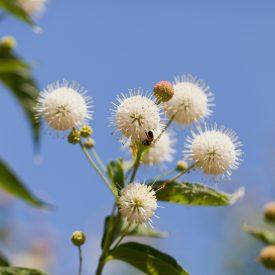
Buttonbush Cephalanthus
Buttonbush is a native shrub with extraordinary versatility and pollinator appeal.
“Year of the Buttonbush” Swag
Shop for “Year of the Buttonbush” gifts, clothing and products on RedBubble.
How to Plant and Grow Buttonbush
Where should I plant buttonbush? Full sun is best
For best blooms, plant buttonbush in full sun. Buttonbush will grow in part shade, but the blooms will not be as prolific. Buttonbush thrives in moist to wet soils, making it a great choice for rain gardens, pond edges, stream banks, or wetland areas. It works well for erosion control. It also grows well in landscapes and garden beds.
When should buttonbush be planted? Spring or Fall
Plant the shrub in fall or spring to avoid excess heat or cold while it establishes in the garden.
How do you plant buttonbush? Space plants 4 to 12 feet apart
Space plants 4 to 12 feet apart, depending on the variety’s mature size. Dig a hole twice as wide and the same depth as the root ball. Amend the soil with compost, then remove the plant from the container and loosen its roots, if needed. Place in the center of the hole, with the root ball flush with the soil line. Fill in the hole, firm the soil gently around the root ball, then water well to remove air pockets. Continue to water regularly the first year until the plant is established.
What type of soil does buttonbush prefer? Rich, evenly moist soil
Buttonbush grows best in rich, evenly moist to wet soil with a neutral to slightly acidic pH of 6.0 to 7.0. It tolerates clay, loam and sand, and it even thrives in boggy spots along streams, wetlands, rain gardens and pond edges. In a regular garden bed, water during long stretches of heat or drought, and don’t let the soil dry out.
Does buttonbush need fertilizer? Slow-release fertilizer in late winter or early spring
Feed buttonbush with a granular slow-release fertilizer in late winter or early spring. Add mulch or compost around the base of the plant to retain moisture, suppress weeds, provide nutrients, and keep roots cool.
When should you prune buttonbush? Late winter or early spring, if needed
Because buttonbush blooms on new wood, prune in late winter or early spring. Remove dead, broken, or diseased branches, if needed. If you wish to train the shrub into a tree form, remove lower branches. Buttonbush doesn’t require pruning, but you can shape plants as desired. If plants become too large for the space, cut them back near the ground in spring, and they’ll regrow.
What pests and diseases bother buttonbush? Few serious pests or diseases
Buttonbush is typically pest- and disease-free when grown in the right conditions. Pests can include thrips, leafhoppers, and lygus bugs. Diseases include brown leaf spot.
What plants pair perfectly with buttonbush? Feeding pollinators in the fall
To feed pollinators when buttonbush blooms fade, consider adding fall-blooming perennials, like aster, ironweed, goldenrod, and cardinal flower. Read more at Fall-Blooming Flowers for Migrating Hummingbirds and Butterflies
FAQs About Buttonbush
Bees, butterflies, and hummingbirds feed on the plant’s nectar-rich flowers, while songbirds, waterfowl, and mammals consume the seeds in fall and winter. Additionally, buttonbush serves as a host plant for the titan sphinx moth, hydrangea sphinx moth, and royal walnut moth. The multi-branched shrub also provides shelter and nesting habitat for wildlife.
Native buttonbush can reach up to 20 feet tall. Newer cultivars offer more compact sizes for smaller spaces, growing only 3 to 6 feet tall and wide, depending on the variety.
Yes! Select a compact variety, like Sugar Shack®. Choose a large container with good drainage to plant the shrub, and place it in full sun. Water regularly—don’t let the soil dry out.
Yes. Deer tend to avoid buttonbush due to its toxic leaves, which contain the glycoside cephalanthin. However, deer may still nibble on the shrub when food is scarce.
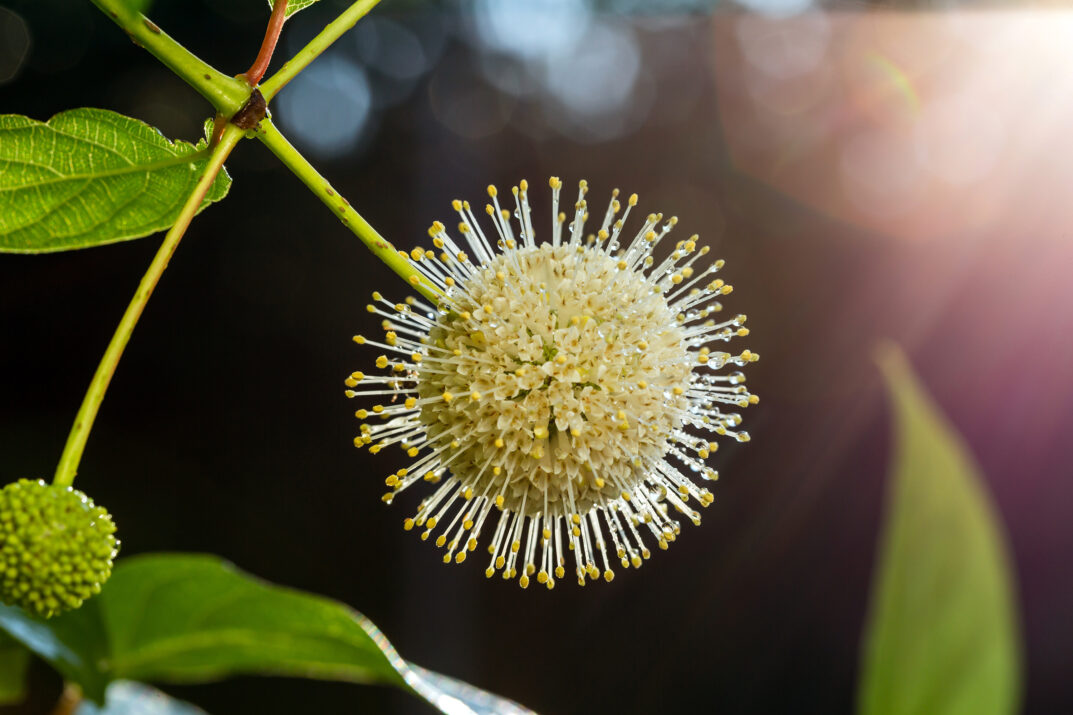
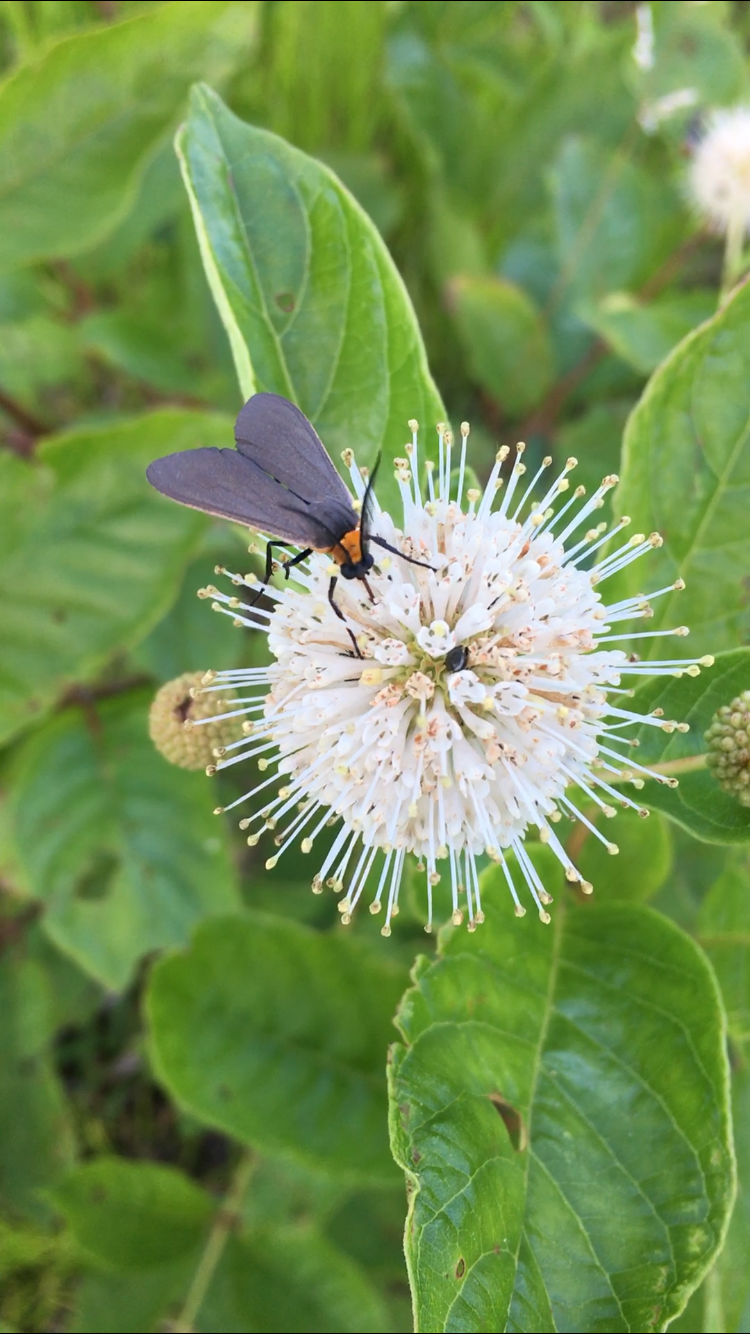
Buttonbush blooms from June through September with round white flower clusters that have a sweet, honey-like scent. These flowers occur in round clusters that have protruding styles (or pollen receptors) that create a pincushion-like appearance. The fruits become reddish-brown and persist into winter for winter appeal.
Yes! Flowers appear in summer, followed by red or tan seed balls, which provide texture and winter interest. The foliage turns from a glossy green in spring and summer to yellow, bronze, or red in fall. The multi-branched shrub adds structural interest to the garden in winter.
While buttonbush grows beautifully in boggy soil, it can also grow in average garden soil. Make sure the soil stays moist—don’t allow it to dry out—and provide additional water during periods of drought.
No. Buttonbush is native to North America. It grows from Nova Scotia to Ontario, south through Florida, and west to the eastern Great Plains.
Yes, in large amounts. Though Buttonbush is not listed on the ASPCA Animal Poison Control Center, the USDA NRCS says WARNING: Common buttonbush contains the poison Cephalathin. Cephalathin will induce vomiting, paralysis, and convulsions if ingested.
Learn More About Buttonbush
- Understanding the Dietary Needs of Pollinators: Insights from University Research by Ernst Seeds
- How to Plant, Grow, and Care for Buttonbush! by Epic Gardening
Purchase Buttonbush at the NGB Member Online Stores and at Your Local Garden Retailer



Promote the Year of the Buttonbush
Buttonbush Presentation (PDF)
The Year of the Buttonbush logo PNG or JPG
Download the 2027 Year of the Buttonbush Fact Sheet (PDF)
8″ x 10″ printable sign
“Did You Know” Fun Facts
Buttonbush poster download PNG
The National Garden Bureau recognizes and thanks the human expert Julie Thompson-Adolf for authorship and contributions to this fact sheet.
This fact sheet is provided as an educational service of the National Garden Bureau. There are no limitations on its use. Please credit National Garden Bureau and link to this page when using all or parts of this article or referencing the Year of the program.
Each U.S. state has its own list of invasive species. Before trying a new plant in your garden, consult the USDA’s National Invasive Species Information website or check with local agencies, such as an Extension specialist.
Please consider our NGB member companies as authoritative sources for information. See the NGB Member Directory for details about our members. Shop Our Members for seed and plant sources.