
Year of the Basil

2027 is the Year of the Basil
The National Garden Bureau (NGB) has named 2027 the Year of the Basil. Each year, NGB’s “Year of the” program highlights plants that are easy to grow, genetically diverse, and full of new breeding for home gardeners to discover. Basil earns the spotlight as one of the most popular herbs in North American gardens, and one of the most improved. Breeders have introduced varieties that resist basil downy mildew and resist bolting for months longer than older types, for bigger, longer harvests. Whether you grow it in a garden bed, a patio container, or a sunny kitchen window, basil rewards you with fragrant leaves for pesto, salads, sauces and teas all summer long. Browse basil pictures.
How to Grow and Use Fragrant, Flavorful Basil
This guide covers the main types of basil, standout varieties and series, and how to start, grow, harvest and store basil for the best flavor.
Overview and History
Now a staple in summer gardens and a star ingredient in a range of dishes, basil has had a legendary journey across the world before arriving in North America with English colonists in the early 17th century.
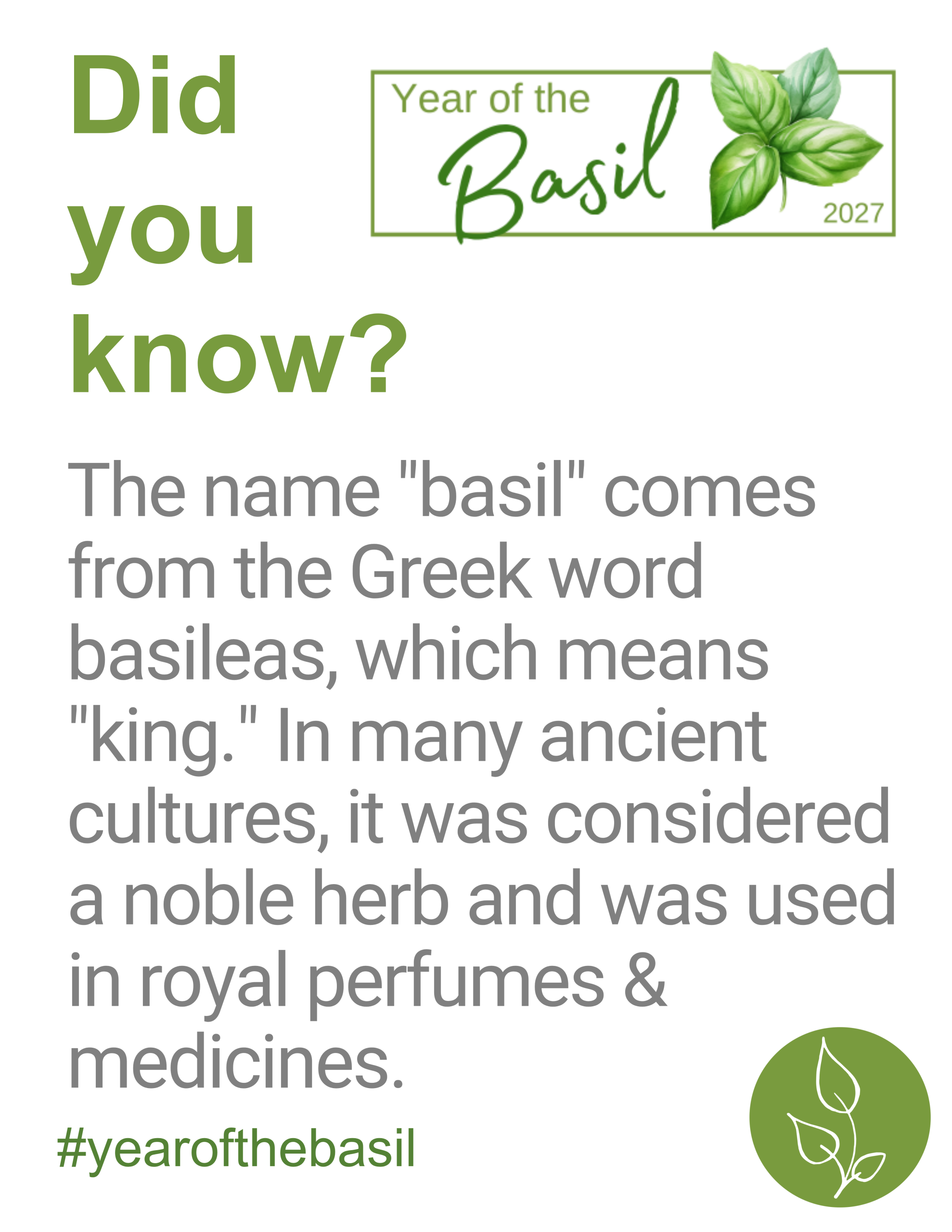
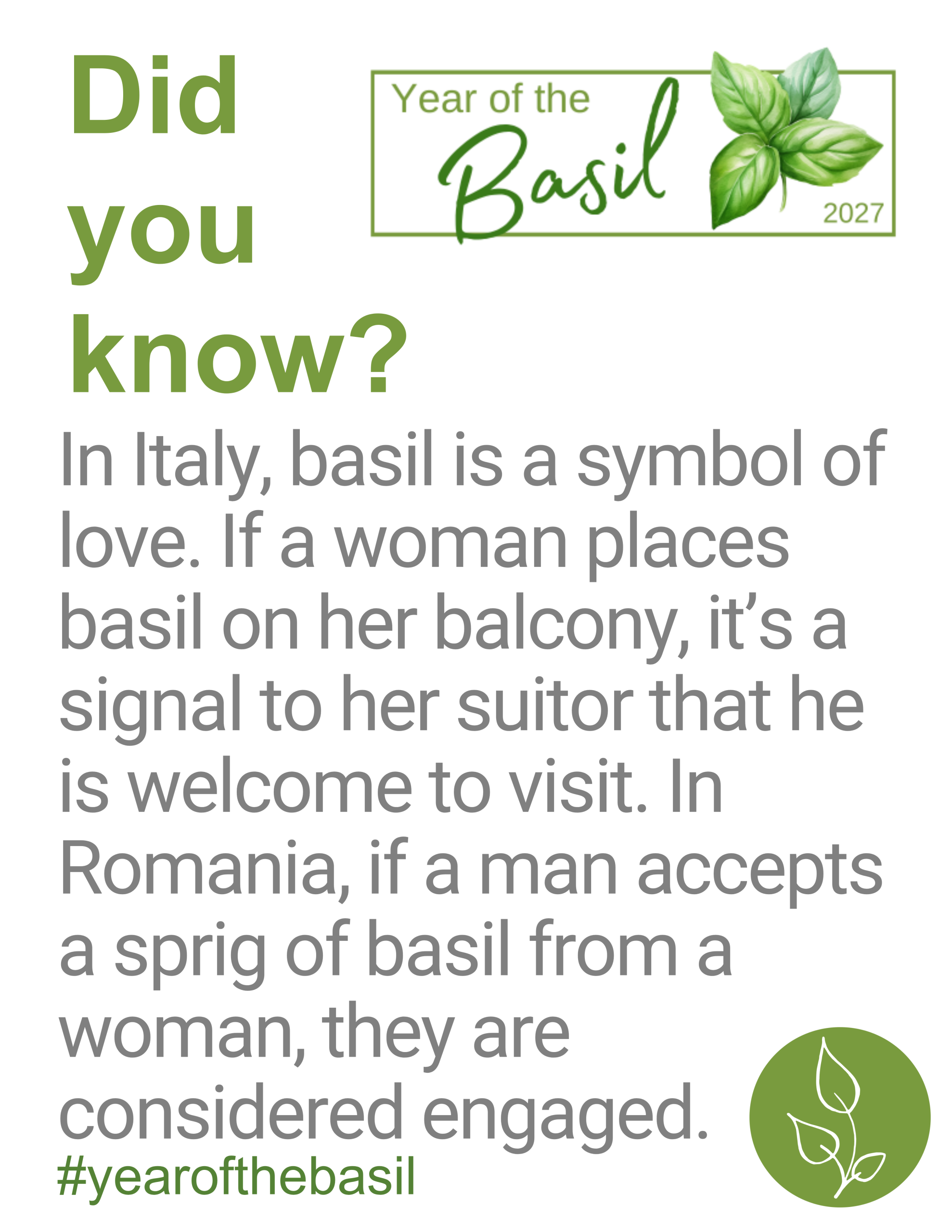
While many assume that basil’s roots trace back to Italy, its story more likely begins in India, where it has been cultivated and revered for over 5,000 years, treasured as a sacred plant in Hinduism and used in Ayurvedic medicine. Traveling along ancient trade routes, Egyptians honored basil, used it in burial rituals, and placed it in tombs to help protect the dead on their journey beyond. Greeks elevated its status to royalty, naming it basilikon, their word for kingly, and crowning it the king of herbs. In Italy, basil became a love token, sparking a love affair with the aromatic herb that remains the heart of their cuisine to this day.
Basic Types of Basil
Basil belongs to the genus Ocimum, part of the mint family — making it a relative of rosemary, sage, and thyme. Today, more than 100 basil varieties are grown around the world for culinary, medicinal, and ornamental use.
Most culinary basils grown in home gardens belong to a single species, Ocimum basilicum. Within this species, countless cultivars have been developed, each distinguished by its own flavor profile, leaf shape, and aromatic qualities.
- Genovese is the classic Italian basil and the essential ingredient in pesto. It’s easily recognized by its oval, downward-cupped, rich emerald green leaves. Its scent is delicate, without the hint of mint or anise found in other varieties.
- Italian Large Leaf basil is prized for its large, pointed, oval leaves, which can grow up to 4″ long. Its flavor is slightly milder and sweeter than Genovese.
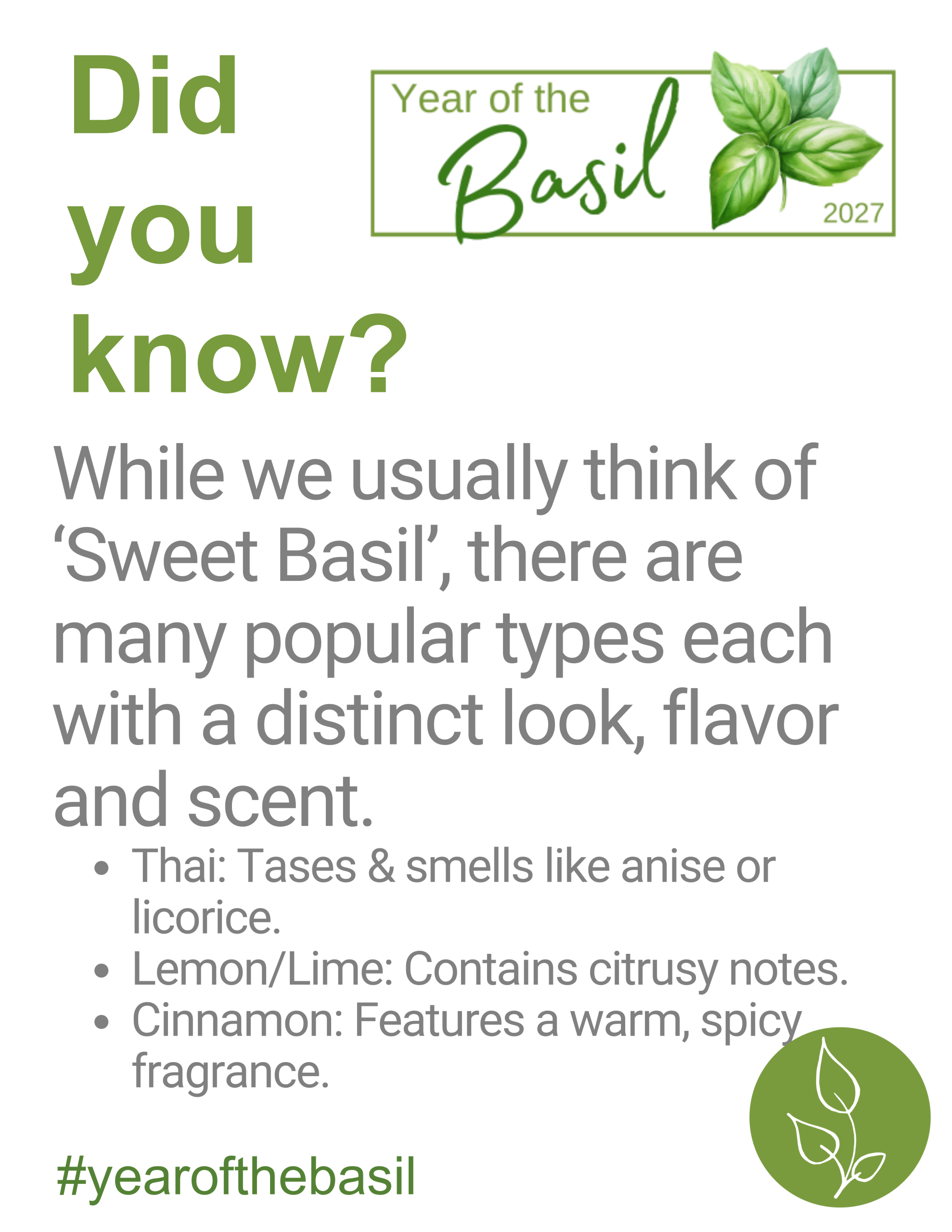
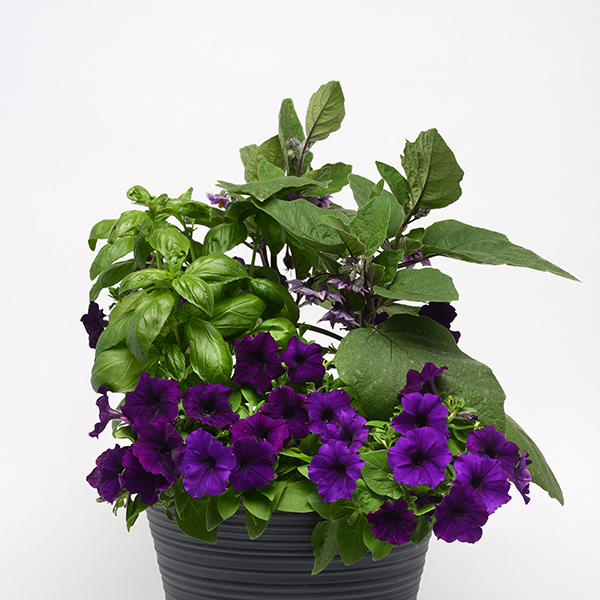
- Thai basil (Ocimum basilicum var. thyrsiflora) has smaller, narrow, pointed leaves in dark green, with distinctive dark purple stems and flowers. It carries a strong anise-and-clove flavor and aroma, essential to Thai cuisine.
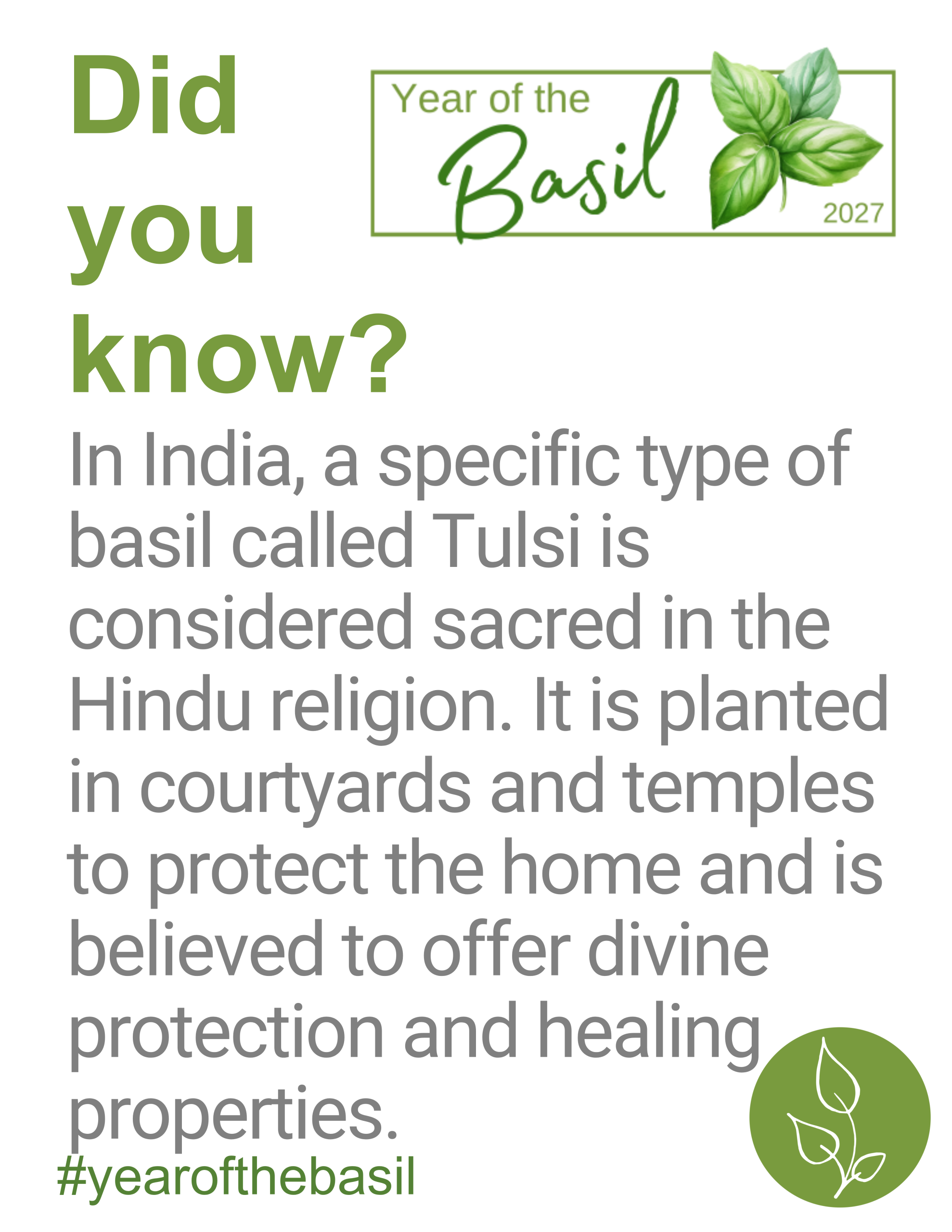
- Holy basil, or tulsi (Ocimum tenuiflorum), is sacred in Hindu tradition. It’s grown both for ritual purposes and to make a nourishing herbal tea.
- Lettuce Leaf basil has extra-large, heavily puckered and ruffled leaves with a gentle downward curve and mild flavor — ideal for fresh wraps, salad rolls, and stuffing.
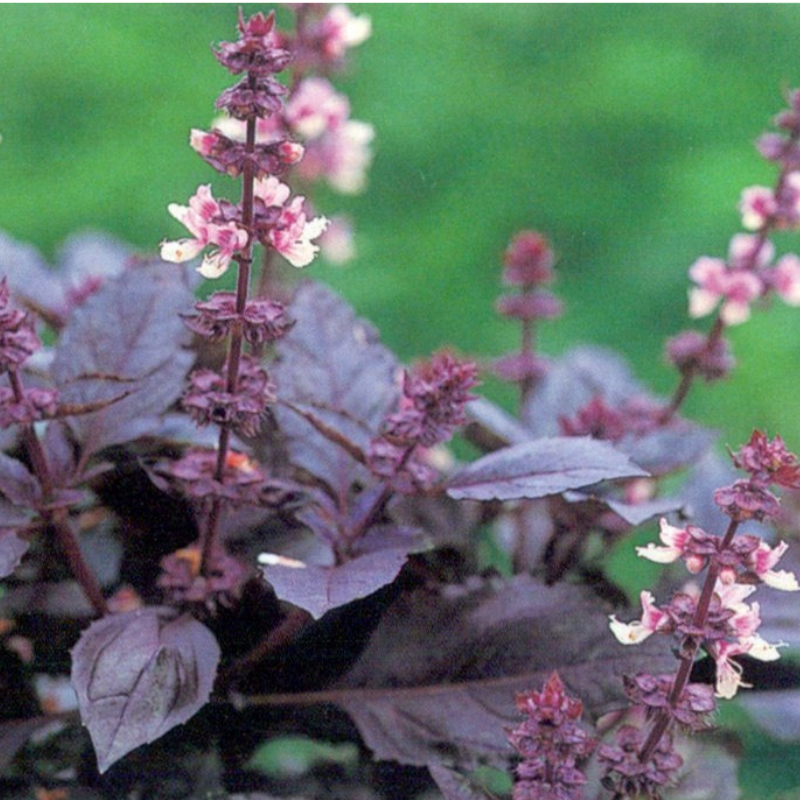
- Purple-leafed basils aren’t a separate species. Their striking color comes from anthocyanin, a natural pigment.
- Lemon and cinnamon basils are grown for their delightful citrus and spicy aromas.
Special Offers
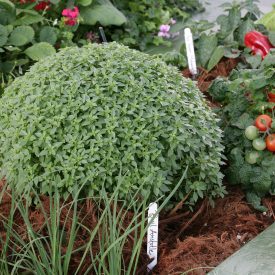
Aristotle Basil
Classic basil taste and aroma. The plant is compact, with tightly packed, tiny, pale green leaves.
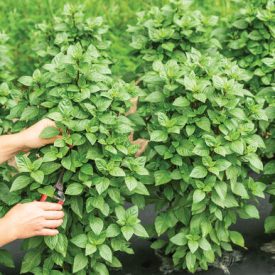
Everleaf Thai Towers Basil
Thai Towers is unlike any Thai basil with its long, dark purple stems and thick green leaves.
“Year of the Basil” Swag
Shop for “Year of the Basil” gifts, clothing and products on RedBubble.
Popular Basil Varieties and Series
See photos of these and more in our Basil picture gallery.
Prospera® Active Series – Compact and standard-sized basil with high resistance to downy mildew (DMR) and tolerance to Fusarium wilt, making it especially valuable in the late summer garden when mildew can quickly destroy plants.
- Noga Prospera Active DMR – standard Genovese type
- Thai Thai Prospera Active DMR – Thai type
- Aya Prospera Active DMR – semi-compact
- Doron Prospera Active DMR – purple
- Mia Prospera Active DMR – semi-compact Genovese type
Everleaf Series – Late-flowering basil that can resist bolting 2-3 months longer than standard varieties, resulting in a longer, more abundant harvest. Plants are sturdy, easy to care for, and grow in a columnar habit well-suited to containers and small gardens.
- Everleaf Emerald Towers – Genovese type
- Everleaf Thai Towers – Thai type
- Everleaf Lemon – Lemon type
All-America Selections Basil Winners – AAS Winners offer gardeners reliable new varieties that have proven their superior garden performance in Trial Grounds across North America.
- Dark Opal – 1962 AAS Edible-Vegetable Winner – An ornamental basil with a licorice flavor
- Purple Ruffles –1987 AAS Flower Winner – An ornamental and edible basil with distinctive ruffled leaves in a deep wine color.
- Siam Queen – 1997 AAS Edible-Vegetable Winner – A Thai basil prized for both culinary and ornamental use.
- Sweet Dani – 1998 AAS Edible-Vegetable Winner – An aromatic herb with a strong lemon scent
- Persian – 2015 AAS Edible-Vegetable Winner – A prolific producer of excellent-tasting lemony silvery-green leaves.
- Dolce Fresca – 2015 AAS Edible-Vegetable Winner – A beautiful edible Genovese basil that makes an excellent pesto.
- Piedmont – 2025 AAS Edible-Vegetable Winner – This basil has exceptional Downy Mildew Resistance (DMR) as it brings the taste of Piedmont, Italy to your garden.
- Treviso – 2026 AAS Edible-Vegetable Winner – These basil leaves are bright green, staying tender and sweet throughout the season and resisting discoloration when made into pesto.
Helios Lemon – Highly fragrant lemon basil
Cardinal – A highly ornamental basil with large burgundy flower spikes that make a stunning addition to cut bouquets.

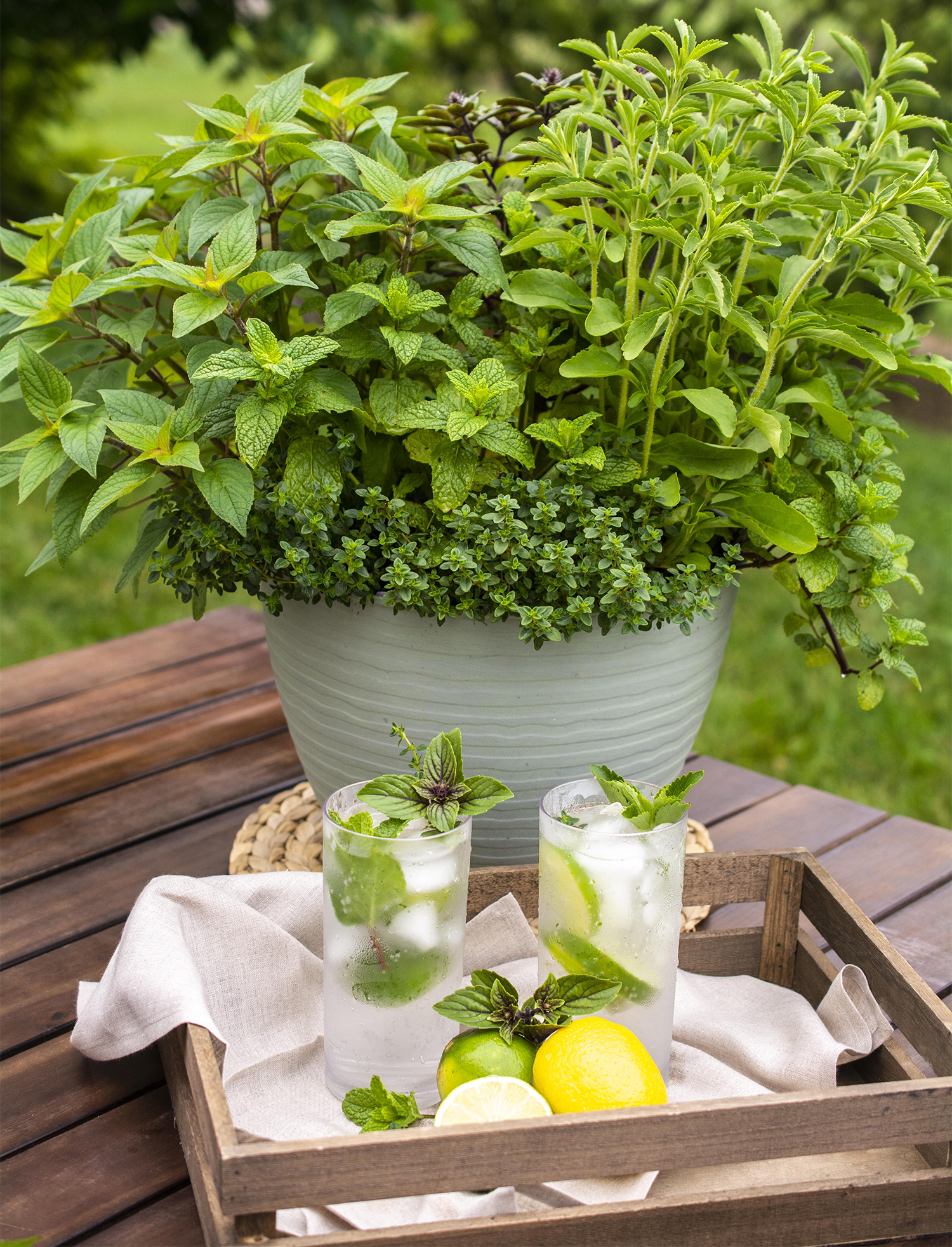
Growing Healthy Basil
Few herbs reward the home gardener quite like basil. This heat-loving, fast-growing herb provides an abundant, fragrant harvest all summer long. Get ready to whip up some homemade pesto and caprese salads!
How do you start basil from seed indoors?
Sow basil seeds ¼″ deep about 6 weeks before moving plants outdoors. Starting basil indoors gives you a head start and stronger, more established plants by the time warm weather arrives. Basil seeds germinate quickly, in just 5 to 10 days, when soil temperatures reach 65-70°F. A seedling heat mat, set to 70-80°F, is a worthy investment to provide fast, even germination. Sow seeds ¼” deep about 6 weeks before you plan to move plants outdoors.
Any tray or container will work for starting seeds. Once seedlings develop their first set of true leaves, pot them up into larger containers so they have room to grow robust and healthy.
Before transplanting, take a week to harden off your seedlings, gradually introducing them to the outdoors by extending their time outside a little more each day. This step toughens up young plants and helps them transition smoothly to growing outdoors. Your basil is ready for its permanent garden home once it has 3-4 sets of true leaves, nighttime temperatures stay reliably above 50°F, and daytime temperatures reach at least 60-70°F.
Can you plant basil seeds directly in the garden?
Direct seeding into the garden is easy. Simply wait until your soil warms to 65-70°F, then plant seeds ¼” deep, spacing them 1″ apart in rows 18″ apart. Once your seedlings have their first true leaves, thin them to 4-8″ apart, giving each plant the space it needs to be productive.
How many basil seeds should you plant per pot?
Only a few seeds are needed for success. Basil is probably one of the easiest herbs to grow. The number one mistake made when growing basil is oversowing. Good quality seeds from our NGB members have a 90-99% germination rate. For example, in a 10-12″ container, three seeds are plenty! You will end up with three strong plants that have plenty of space to flourish.
Does basil do best in sun or shade?
Basil needs full sun, 6-8 hours of direct light a day. The soil should be well-draining and moderately rich. Give each plant plenty of room to thrive by spacing seedlings 4-8″ apart, with 18″ between rows.
What are good companion plants for basil?
Tomatoes, peppers, and eggplants, or root vegetables such as carrots, radishes, and beets, all grow well next to basil.
How do you care for basil in the garden?
Provide consistent moisture for healthy plants. Water your basil plants at the soil line rather than overhead. This keeps leaves dry and helps prevent disease while ensuring roots get the water they need. Basil is sensitive to both drought stress and overwatering, so make sure the soil is consistently moist but not waterlogged.
As a light feeder, basil does not have high fertility needs: a balanced, all-purpose fertilizer at planting time is often all it needs. Throughout the season, let your plants’ leaves be your guide. Vibrant green leaves mean healthy plants, while pale or yellowing leaves signal it’s time for a boost. A diluted liquid fish fertilizer, applied every 4-6 weeks either as a foliar spray or watered at the base, gives your plants the nutrients they need to keep thriving.
How do you prevent basil downy mildew?
Basil downy mildew is caused by Peronospora belbahrii, a water mold (oomycete) rather than a true fungus. It thrives in cool, humid, and wet conditions and spreads rapidly via airborne spores. It remains one of the most serious threats to the crop today. The best way to prevent Basil Downy Mildew is to grow disease-resistant varieties, such as many of the recent AAS Winners. Learn more about Basil Downy Mildew prevention here.
How do you pinch basil to make it bushy?
The trick to full, leafy plants is pinching. Once your plants reach about 6″ tall, pinch off the central stem. As the plant produces new branching stems, continue to pinch them back as well. Pinching encourages branching, transforming a single stem into a fuller, bushier plant with many more leaves to harvest. Pinching your plants throughout the season boosts your harvest and delays flowering, keeping your basil productive and flavorful from early summer into the fall.
How do you use fresh basil?
Basil is best known for pesto, but its fresh, aromatic flavor can brighten everything from salads and sandwiches to soups, sauces, drinks, and desserts. For the boldest flavor, add fresh basil near the end of cooking or just before serving. Heat quickly softens its flavor and fragrance, so a final handful of torn leaves often makes the biggest impact.
Classic sweet and Genovese basils are natural partners for tomatoes, mozzarella, garlic, olive oil, pasta, pizza, grilled vegetables, eggs, chicken, and seafood. Toss whole or torn leaves into green salads, layer them into sandwiches, blend them into dressings, or scatter them over roasted vegetables. Lettuce Leaf basil can be used as a flavorful wrap, while purple basil adds striking color to fresh dishes.
Different basil types invite different uses.
- Thai basil brings an anise-clove note to curries, noodle dishes, stir-fries, soups, and fresh spring rolls.
- Lemon basil is especially good with fish, fruit salads, iced tea, lemonade, and vinaigrettes.
- Cinnamon basil adds warm spice to teas, baked goods, fruit dishes, and herbal syrups.
When and how to harvest basil?
Harvest basil often to keep plants full, leafy, and productive. Begin once plants are about 6″ tall and have several sets of true leaves. For the best flavor, harvest in the morning after the dew has dried but before the heat of the day. Pinch or cut stems just above a leaf node, where two leaves meet the stem, to encourage new branching. Avoid removing more than one-third of the plant at one time, and pinch off flower buds as they appear to keep plants focused on leaf production.
How do you store fresh basil?
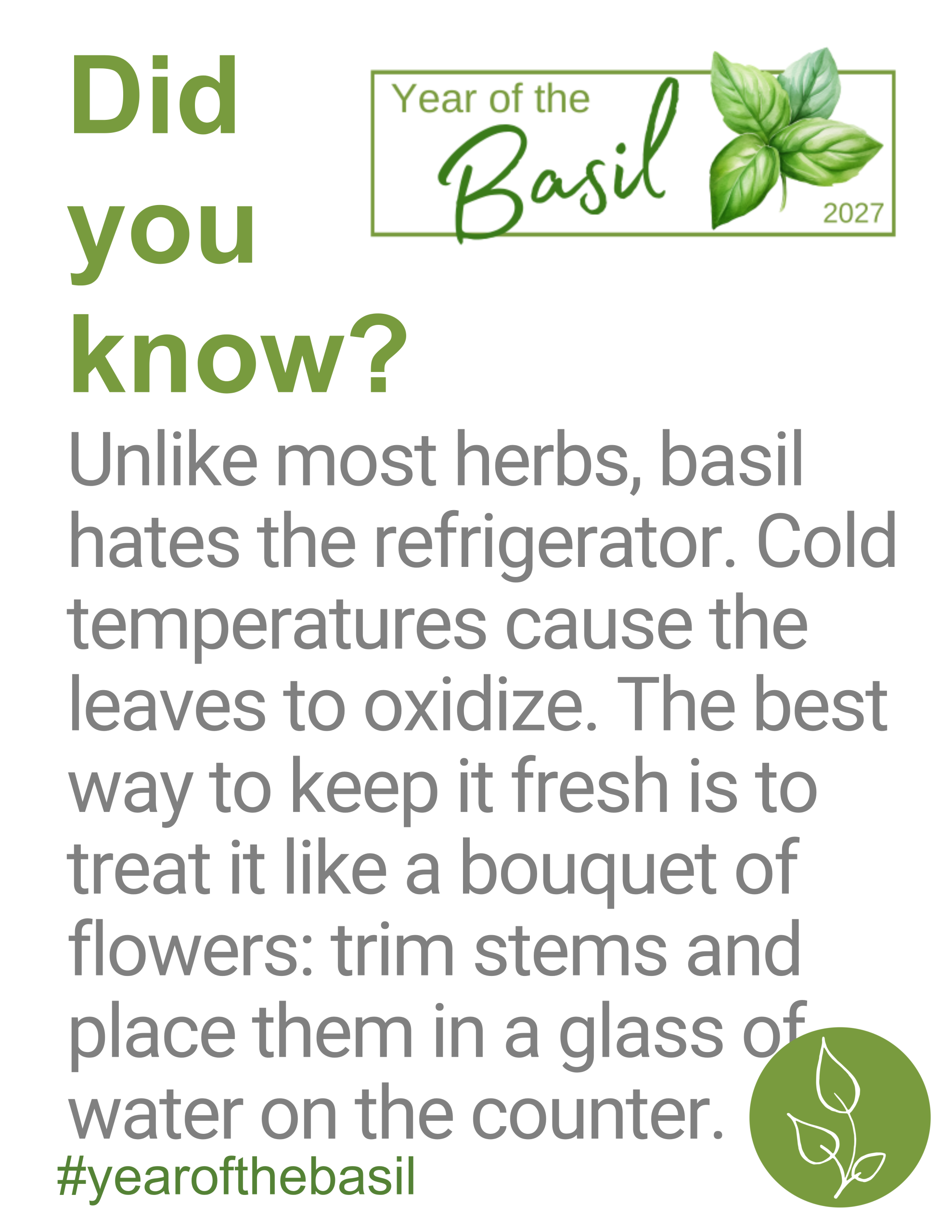
For short-term storage, trim the stems and place them in a glass or jar of water, much like a small bouquet, then keep it at room temperature and change the water every day or two. Avoid storing basil in a cold refrigerator for long periods, as the leaves can darken and wilt. For longer storage, blend leaves into pesto, freeze chopped basil in olive oil, or dry leaves for use in soups, sauces, and cooked dishes.
Basil Growing FAQs: Planting, Care, Harvest & Storage
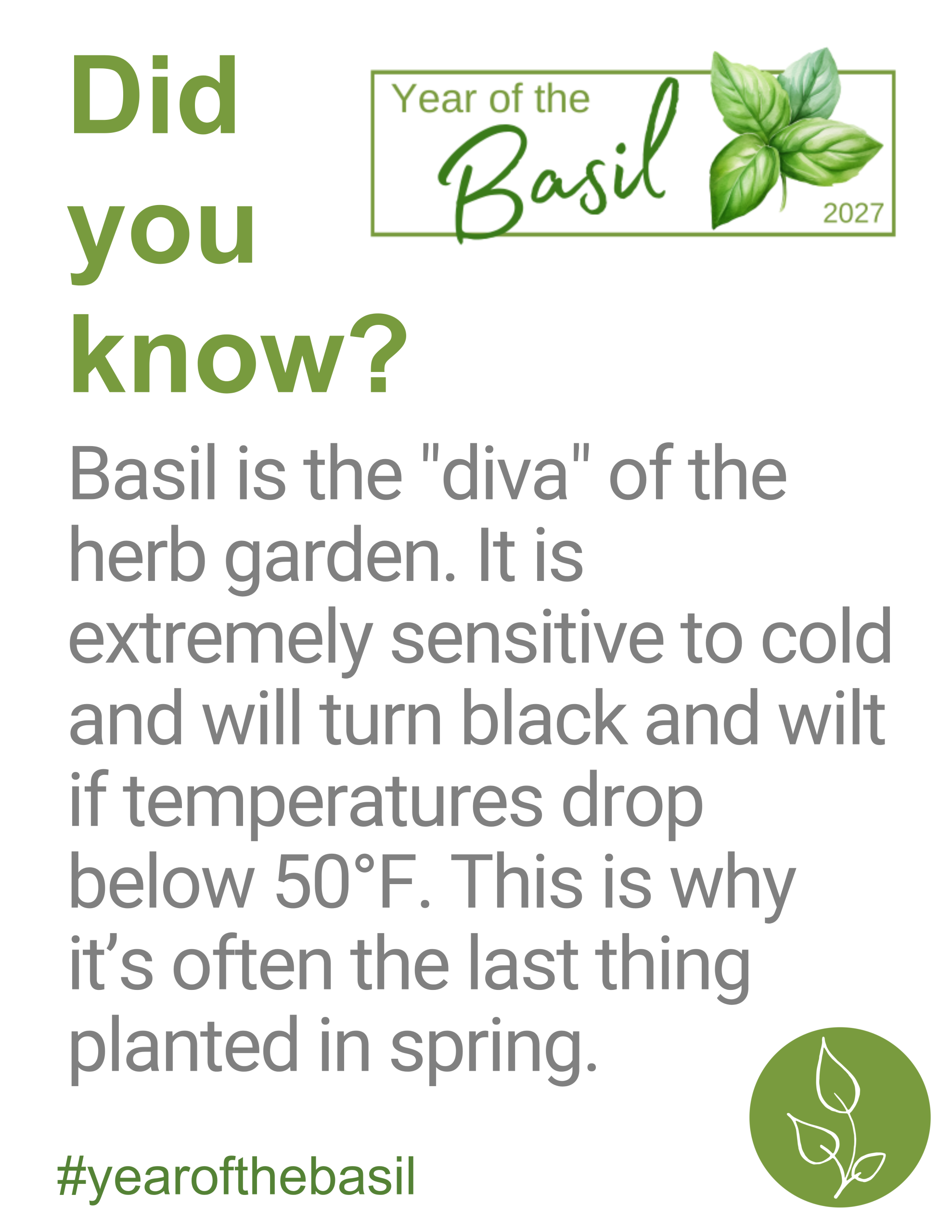
Basil is grown as a warm-season annual in most North American gardens. It is frost-tender, so plant it after the danger of frost has passed and expect plants to decline once cold weather returns in fall.
Genovese basil is the classic choice for pesto because of its rich, delicate flavor without mint or anise notes. All-America Selections winners Dolce Fresca (2015) and Treviso (2026) are also excellent; Treviso leaves resist discoloring when made into pesto.
Thai basil has small, narrow, pointed leaves, dark purple stems and flowers, and a strong anise-and-clove flavor used in Thai cuisine, like AAS Winner Siam Queen. Sweet or Genovese basil has larger, rounded, cupped green leaves and a milder, delicate flavor that suits Italian dishes such as pesto and caprese salad.
Basil can be grown in containers. Columnar varieties such as the Everleaf series and compact types such as Aristotle are especially well suited to pots and small spaces.
Basil downy mildew is a disease that causes yellowing leaves, often with gray-purple fuzzy growth on the undersides. It can destroy plants quickly in late summer. Prevent it by planting downy mildew–resistant (DMR) varieties such as the Prospera Active series or AAS Winners Piedmont and Treviso, and by watering at the soil line to keep leaves dry. Find out more about downy mildew: Battle Against Basil Downy Mildew.
Do not put basil in the refrigerator. Basil dislikes cold, and refrigerated leaves darken and wilt. Instead, trim the stems and stand them in a glass of water at room temperature, changing the water every day or two. For longer storage, make pesto, freeze chopped basil in olive oil, or dry the leaves.
Yes. You can grow basil indoors. Give basil at least 6 hours of direct sun a day in a south- or west-facing window, or use a grow light. Plant in a container with drainage holes, water when the top of the soil feels dry, and harvest often, never more than one-third of the plant at a time. You can also bring garden plants indoors before frost.
Yellow leaves usually mean overwatering, poor drainage, or a nutrient deficiency. Let the soil dry slightly and feed lightly. Black or dark spots usually mean cold damage, since basil is hurt below about 50°F, or downy mildew, which shows gray-purple fuzz on the leaf undersides.
No. Basil is not toxic to cats and dogs. The ASPCA lists basil as non-toxic to cats and dogs. Basil pesto is a different story: it usually contains garlic, which is toxic to pets.
Learn More About Basil
- Growing and Using Herbs: Basil by National Garden Bureau
- Ripe and Ready? How to Know When to Harvest Homegrown Fruits and Veggies by National Garden Bureau
- Savor Flavor, Fragrance and Beauty with Homegrown Herbs by National Garden Bureau
- Growing Basil Herbs by Bonnie Plants
- How to Grow Basil by West Coast Seeds
- How to Grow Basil Indoors by Southern Living
Purchase Basil at NGB Member Online Stores and at Your Local Garden Retailer



















Promote the Year of the Basil
Basil Presentation (PDF)
The Year of the Basil logo PNG or JPG
Download the 2027 Year of the Basil Fact Sheet
8″ x 10″ printable sign
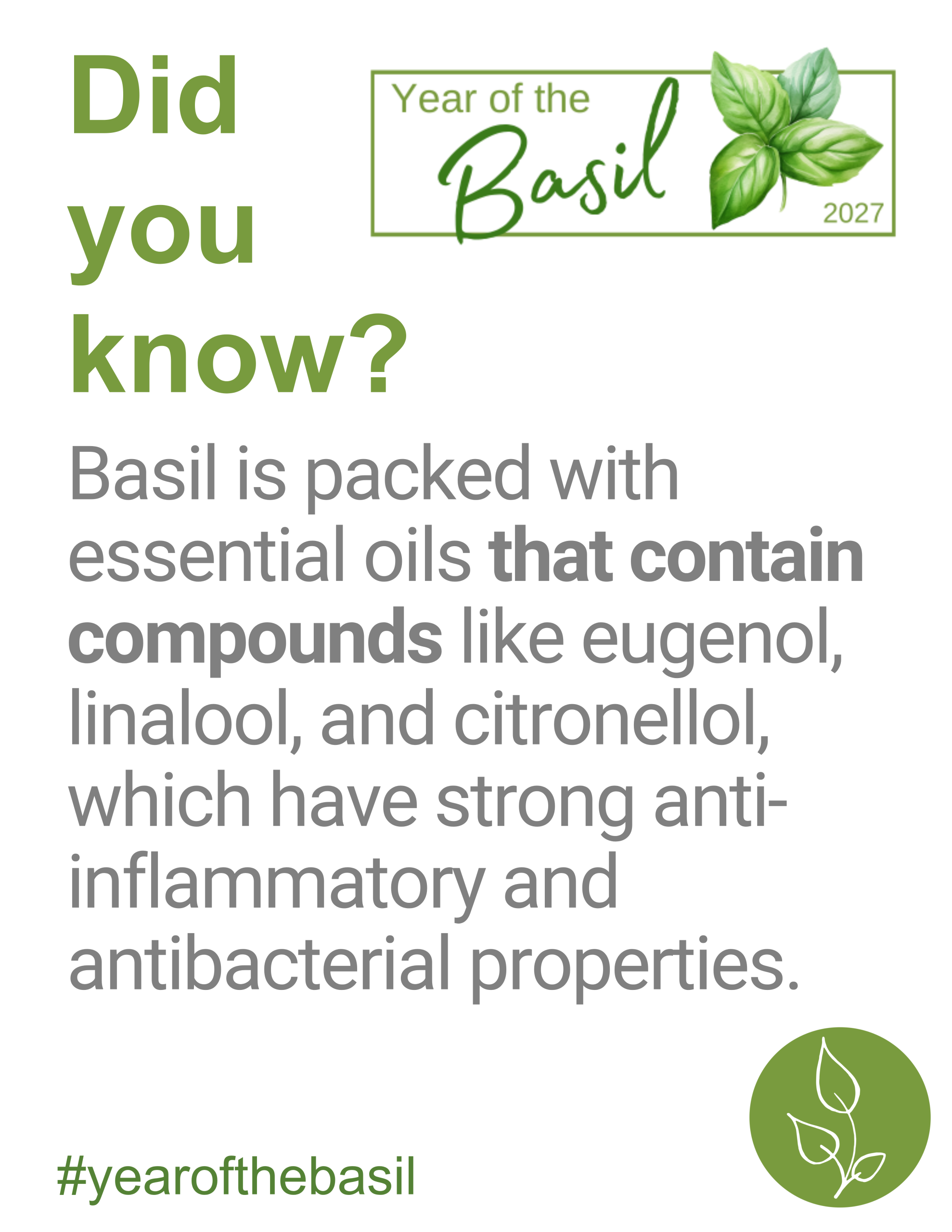
“Did You Know” Fun Facts
Basil poster download PNG
The National Garden Bureau recognizes and thanks the human experts at West Coast Seeds, a member of the NGB, for their authorship and contributions to this fact sheet.
This fact sheet is provided as an educational service of the National Garden Bureau. There are no limitations on its use. Please credit National Garden Bureau and link to this page when using all or parts of this article or referencing the Year of the program.
Each state in the U.S. has its own list of invasive species. Before trying a new plant in your garden, refer to the USDA’s National Invasive Species Information website or check with local agencies such as an Extension specialist.
Please consider our NGB member companies as authoritative sources for information. See the NGB Member Directory for details about our members. Shop Our Members for seed and plant sources.